

The program division “Structure Formation” investigates how molecules, polymers and colloidal particles join to form materials. It studies fundamental processes of structure formation and applies them to prepare new materials from liquid precursors.
We study how the properties of composite and hybrid materials depend on their microstructures and how to change them. To this end, we systematically vary size, geometry, chemical composition, and arrangement of the materials’ constituents. We observe how microstructure and interfaces form and affect material properties to create transparent conductive layers of metal nanoparticles for electronics, composites of conductive polymers with optically active particles for sensors and supraparticles that contain optically active nanoparticles, for example. We see particles as the basis of future “active nanocomposites” that can interface with electronics and change their properties whenever required.

Team Members


Cooperation
INM Fellowship project with Prof. Nico Voelcker, Monash University in Melbourne
The aim of this project is to establish a collaboration for Responsive Release Materials that will focus and enhance the collaboration between the Leibniz Institute for New Materials (INM) and the Melbourne Centre for Nanofabrication (MCN) in Australia.
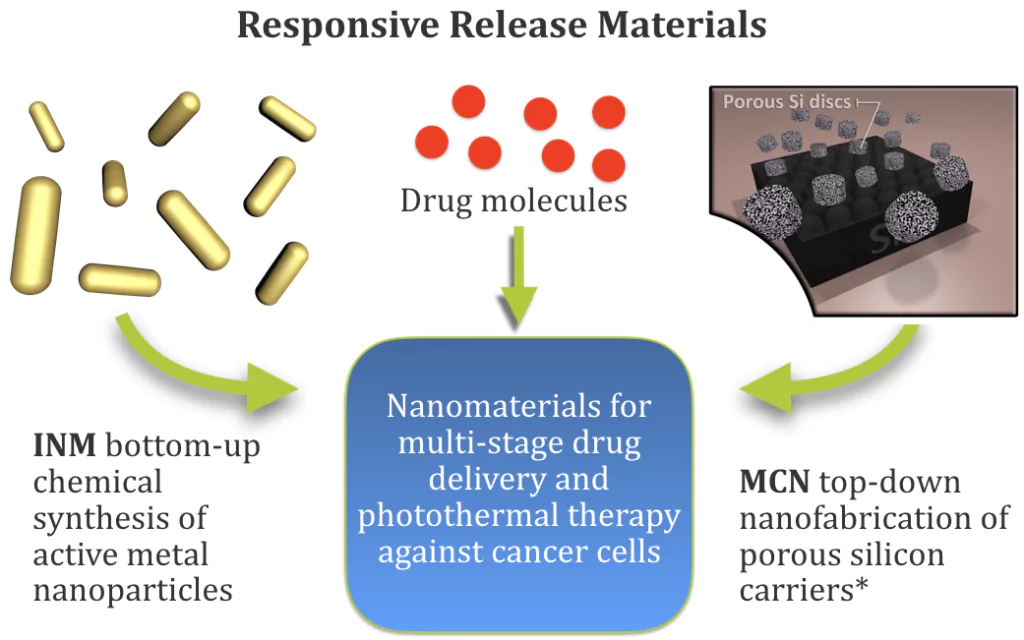
Nanomaterials can enhance the delivery of therapeutics to diseased tissues or cells, for example if their size and shape are suitable for cell internalization, or via their large specific surface area. Here, we combine this principle with the ability of gold nanoparticles to be heated at a distance with electromagnetic radiation. The resulting heat can be exploited to kill pathogens or cancer cells, or make them more susceptible to conventional drug treatment. Gold nanoparticles will be integrated into larger porous silicon particles in order to design multi-stage drug delivery platforms. The program leverages complementary expertise in bottom-up materials synthesis at the INM and cutting-edge nanofabrication techniques available at the Melbourne Centre for Nanofabrication.
Current Projects
3D-ConAn: Quantitative analysis of 3D conductive network structure in composites
3D-ConAn: Quantitative analysis of 3D conductive network structure in composites
In this project, we fabricate stretchable, conductive polymer composites (CPCs) based on silver particles. The particles are dispersed in an elastomer matrix. Above the percolation threshold, the material becomes conductive as a long-range network is formed. We analyse the 3D structure of the network by Focused Ion Beam – Scanning Electron Microscopy (FIB-SEM) tomography and correlate microscopic network metrics with macroscopic conductivity of the material. Furthermore, electromechanical tensile/compression tests are performed, and the network structure is correlated with material’s dynamic behaviour. As a model material we use spherical silver particles in a polydimethylsiloxane (PDMS) matrix.

SensIC: Stretchable electronic materials for product-integrated printed sensors
Makara Lay & Thomas Kister: SensIC
In this project, INM develops new materials for printable temperature sensors and their mechanically flexible connection. Inks and pastes for inkjet and screen-printing technologies are prepared based on mixtures of molecular, nanoscale, and microscale components that form functional structures and require little or no sintering. The molecular nature of the internal interfaces is studied and modified in order to enable reliable performance upon mechanical cycling. Close collaboration with the partners Continental and KIT guarantees the compatibility of the materials with suitable processing. In addition, INM investigates encapsulation materials that add security and unalterable device identification in collaboration with the partner Polysecure.

AdRecBat: Recyclability-by-Design for Lithium Ion Batteries
Bettina Zimmer & Qijun Xie: AdRecBat
In light of the growing demand for lithium-ion batteries and limited supply of key raw materials, there is an urgent need for efficient and sustainable recycling. In traditional (indirect) recycling, battery modules are thermally disintegrated or shredded before being processed pyro- or hydrometallurgically. This requires a lot of energy and/or chemicals, and some compounds (e. g. cathodic active material) and elements (e. g. lithium in the case of pyrometallurgy) cannot be recovered.
In AdRecBat (additive-based ‘design for recycling’ of lithium-ion batteries), we develop a recycling process for direct recovery of active materials: Battery components will not be destroyed but separated from each other with the aid of trigger additives. The latter will be designed and integrated such that
- they cause debonding through external stimuli (e. g. temperature, pH) at three key interfaces: (1) sealing seam of the pouch cell, (2) interface current collector foil-electrode and (3) interface active material-binder.
- good battery performance and safety are ensured.
We collaborate with the Fraunhofer Institute for Silicate Research in Würzburg (ISC) and the Friedrich-Alexander-Universität in Erlangen (FAU). At the INM, we prepare and investigate the effect of trigger additives (e. g. blowing agents, surfactants) for interfaces (2) and (3).

StableInK: Stabilization mechanisms of non-polar metal nanoparticles
Tobias Knapp – StableInK: Stabilization mechanisms of nonpolar metal colloids with thin organic shells
Metal colloids such as gold nanoparticles can be used as building blocks for a variety of applications (such as printable electronics or sensor technology). The main problem is the low stability of the inks, which causes the particles to precipitate during storage (agglomeration). The project will investigate the interactions between the different components of the dispersion (core, shell, solvent) to understand the underlying stabilization mechanisms. The project will develop model systems for the colloidal stability of non-polar nanoparticle dispersions.

LT-PhotoInk: Nanoparticle inks for easily sintering printed electronics
Gisela Heppe – LT-PhotoInk: Ag nanoparticle inks for photonic sintering of inkjet-printed structures on substrates with low thermal resistance
The aim of the project is to develop materials for electronics that can be printed by inkjet on more temperature-sensitive but therefore more cost-effective substrates. This also brings into focus carrier materials that are flexible or transparent, thus opening new areas of application. This is achieved by a photo-sintering process that can be carried out at low temperatures, which requires a special ink-jet ink which consists of silver nanoparticles. To achieve photo-sintering of the ink at low temperatures, the particle surface must be coated with suitable ligands, among other things. Under the chosen sintering conditions, this leads to a destabilization of the dispersion, allowing as many conductive contact paths as possible to be formed between the silver nanoparticles. In addition, nanoparticles of specific shapes and sizes are combined to optimize energy absorption in the sintering process. The aim is to achieve the conductivity of pure silver with the conductor paths printed in this way.

/ Inkjet printed electronics on temperature sensitive materials e.g. paper

Flexible Elektronics
CompoAge: Ageing mechanisms of polyurethane nanocomposites
PU-composites
Nanoparticles influence the physical and the chemical properties of composite materials. In this project the influence of the amount of nanoparticles on the ageing behavior of polyurethane-based composites shall be investigated. Therefore, a polyurethane-based material is modified with different amounts of silica nanoparticles (0-30 wt.%). Because the dispersion of the silica nanoparticles within the matrix influences the material properties, ultramicrotome sections of the silica modified composites are prepared and the dispersion of the nanoparticles in the matrix is investigated by Transmission Electron Microscopy (TEM). To simulate the ageing, the silica modified composites are stored in a KOH-solution (20% ) at ambient temperature. Afterwards the influence of amount of silica nanoparticles is investigated by measuring the mechanical properties (determination of tensile strength and Young’s modulus by tensile tests and determination of microhardness) as well as the thermomechanical properties (determination of glass transmission temperature – Tg and Young’s modulus by Dynamic Mechanical Analyses – DMA and Differential Scanning Calorimetry – DSC) of the modified composites. Possible chemical changes are detected by IR-spectroscopy.
PALS: Plasmonically activated Living Materials
Selim Basaran – Infrared-activable Engineered Living Materials
Engineered Living materials (ELMs) are a type of advanced material that incorporates engineered living organisms (responsive function) into the material matrix (scaffold function). These materials are designed to exhibit biological functionality such as responsiveness to environmental stimuli to produce e.g. proteins or drugs.
We integrate gold nanorods in ELMs to design IR-sensitive Engineered Living Materials with biomedical applicable structures that can rapidly reach 39°C-44°C by plasmonic NIR light stimulation to induce protein or antibiotic production. The temperature profile is controlled by combination of IR thermography and thermocouples. The protein and drug production are quantified as a function of plasmonic stimulation by gold nanorods via ex situ fluorescence microscopy and ESI-MS.

BROADCAST: Stretchable conductors for dielectric actuators in soft robots
Lingyu Liu– Biomimetic robots autonomously driven by dielectric elastomers
Compared to traditional robots, soft robots are usually composed of soft stimuli–responsive materials, which make them have good adaptability and compliance and can interact with the environment. The soft stimuli–responsive materials commonly used in soft robots include dielectric elastomers (DEs), and multi-functional DEs with bio-inspired control strategies can achieve autonomous peristalsis, locomotion, and similar behavior. Nowadays, the improvement in soft robots is hampered by a lack of materials for such circuits and missing rules for design. In this project, we collaborate with soft robotic engineers to investigate novel, autonomously running electro-mechanical soft conductive materials for driving soft biomimetic robotic systems to predict the complex electro-mechanical behavior of those structures.

StableWires: Ligand shells and the shape stability of ultrathin nanowires
Yannic Curto: Project Stable Wires
Shape stability is an inherent limitation of ultrathin nanowires. Because a thin wire can break up into spheres due to a phenomenon is called Rayleigh-Plateau instability. It is not possible today to predict which nanowires remain structurally stable under which conditions. It is known, however, that the structural stability of ultrathin nanowires depends both on surface chemistry and solid structure. Ligands play a key role in the formation of highly anisotropic nanowires, and the same ligands contribute to structural stability. We study in this project the structural stability of chemically synthesized, ultrathin nanowires to identify the role of solid core material and molecular ligand shell in wire stability. Therefore, we synthesize different metal and semiconductor nanowires with very similar core diameters below 10nm and with different ligand shells.

InPrint-HyPoCo: Inkjet-Printable Hybrid Particle Polymer Composites
Michael Klos: Mechanically robust, sinter-free conductive particle-polymer-nanocomposites
The fast and cost-effective production of conductive electrodes and electrically conductive structures is of particular interest for RFID sensors or smart packaging. Thin layers can be printed with inkjet printing on different substrates to save material. These are often sensitive toward mechanical deformation or have a bad adhesion to the substrate. In addition, the often-needed thermal post-treatment limits the application.
In this project, we investigate the mechanical properties, as well as the adhesion of inkjet printed lines, of our hybrid sinter-free gold nanoparticle ink. We prepare nanocomposites of the PEDOT:PSS stabilized gold nanoparticles and various non-conductive polyvinyl alcohols. We investigate the influence of different molecular weights and degrees of hydrolysis of the polyvinyl alcohols on the mechanical properties and conductivity.

DigiBatMat: A digital platform for battery material data
Andriy Taranovskyy & Lisa Beran: DigiBatMat
The DigiBatMat project is a part of nationwide initiative of German Federal Ministry of Education and Research (BMBF)– Plattform MaterialDigital, which aims to digitize materials and the transformation of their properties during the technological production processes. Within this project, a digital platform of battery production process was developed that contains steps (raw materials mixing, electrode calendaring, cell assembly etc.) and items (raw materials, intermediate products, electrodes, cells etc.). The structure is filled with reference heterogenous data of the production process parameters as well as the battery materials properties, derived from various analytical methods that were performed on items at different stages of the production chain. All are linked in the database according to their position in the whole process chain. Besides structuring the data, the platform will include additional functionalities for data driven research, such as correlation analysis and machine learning. At the INM, we study the comprehensive effect of conductive additive properties (morphology, surface chemistry) together with the mixing speed during the dispersion step that effects its particle size distribution on the conductivity of battery electrodes and electrochemical performance of full cells. Representative data of multiple characterization methods, including (electro-)rheology, tomography, Boehm titration, light microscopy, SAXS, and more, is collected, analyzed and uploaded into the digital platform. This research is done in collaboration with our partners from Institute for particle technology (iPAT), Institute of Machine Tools and Production Technology (IWF), Aalen University, AWS – Institute for digital products and processes gGmbH and is located in the ProZell Competence Cluster at Project Management Jülich.

GreenPaste: Recyclable, low-sintering silver pastes for sustainable printed electronics
David van Impelen: Screen printing of silver pastes for sustainable printed electronics
One way of creating electronic components and circuits is by employing printing techniques. Some advantages of this include a wide range of substrate choice, introducing flexibility and facilitating recycling of the components. In this project we print pastes containing silver micro particles using a technique called screen-printing. To increase the conductivity, we heat up the prints to induce sintering of the silver microparticles. Sintering is a diffusion-based process leading to interconnection of the silver particles, which results in a higher conductivity of the printed layer of particles. At which temperatures this sintering process is induced depends on size, shape, and chemistry of the silver particles.

ARNIM II: dynamics and structure of agglomerating nanoparticles in mirogravity
Bart-Jan Niebuur: ARNIM II: dynamics and structure of agglomerating nanoparticles in mirogravity
Self-assembly of nanoparticle superstructures allow us to produce materials with well-defined geometries and, therefore, electrical and optical properties. This is very interesting for materials: For example, electrically conductive metal nanoparticles can be arranged in an insulating matrix to maximize or minimize conductivity, depending on whether a dielectric is required or a conductor. Unfortunately, this process is hindered by gravity: Larger arrangements of metallic particles are very filigree but heavy enough to be torn by their own weight so that, for example, connectivity and thus conductivity is lost.

Copyright: DLR
The ARNIM-II project, supported by the German Aerospace Center (DLR), addresses the question how gravity influences self-assembly of metallic nanoparticles. For this, an experimental setup is developed to investigate structural properties of dispersions on length scales ranging from 50 nanometer up to milimeters, combining three different optical experimental methods, which is suitable for flights on sounding rockets. On board a sounding rocket of the MAPHEUS-programm of the DLR (apogee ~250 km, which allows approximately 6 min of microgravity), we investigate the agglomeration of gold nanoparticles. The results will help to develop new strategies for bottom-up production methods for functional materials.
Biofunctional Inkjet-printable Au Sensor
Muniba Bhatti & Yannic Brasse
We discuss the synthesis and properties gold nanoparticle (AuNPs) inks that are conductive directly after deposition and can be functionalized with biological molecules. A conductive biopolymer (P3KHT) from the class of polythiophenes was immobilized on quasi-spherical gold nanoparticles with diameters of 74 ± 19 nm. Glucose oxidase (GOx) was covalently bound selectively to the functional carboxylate groups in the polymer side chains under mild reaction conditions. The coupling with EDC/NHS was performed in solution prior to deposition or on the surface of dropcasted AuNPs@P3KHT structures. In both cases, one amine group of GOx was covalently bound to the functional carboxylate groups. In future this ink should be used to fabricate electrodes with enhanced surface structure in order to improve the enzymatic signal in amperometric glucose sensing.

Figure 1. Schematic procedure of bioconjugation to the bioactive gold-polythiophene hybrid nanoparticles AuNPs@P3KHT, which can the performed (a) after film formation by deposition (surface bioconjugation) or (b) before deposition in the particle dispersion (solution bioconjugation).
ReIn-E: Recyclable integrated electronics
Ecological prudence and regulation of the European Union and national governments require an increasing level of recycling for electronics. While polymer-integrated electronics can reduce the amount of material used, the recovery of materials (metals and polymers) from integrated parts is more difficult than for conventional electronics. This constitutes a severe risk for the innovation, but it can be mitigated by well-informed material choice and design adaptation. To this end, ReIn-E will introduce, test, and optimize new materials for “release layers” as part of this design; ensure the reliability, performance, and market compatibility of the recyclable design; establish a “best practice” model cycle from the production of pastes through printing, molding, and metal recovery.
I-Seed
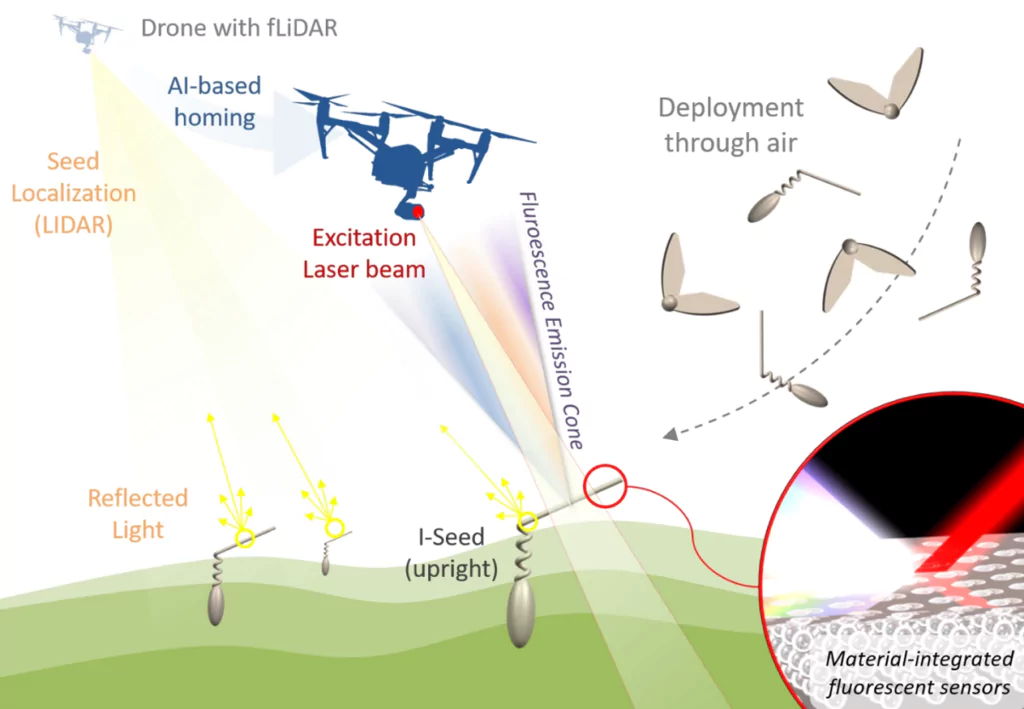
I-Seed: Distributed environmental sensing with sensor materials in soft robots
I-Seed unites bioinspired soft robotics, material science, and environmental science, with the aim of developing a new generation of self-deployable and biodegradable soft miniaturized robots that mimic the behavior of plant seeds. These robots, composed of artificial plant structures and sensor materials, are designed to monitor in-situ environmental parameters in air and topsoil, such as the presence of pollutants, moisture, CO2 levels, temperature, and water quality. Within this project, we are engineering fluorescent sensor materials whose optical properties are dependent on environmental factors. All these fluorescent materials will be chosen for their degradability and environmental compatibility.
ARNIM: Agglomeration Of Nanoparticles in Microgravitation
Modern methods of “self-arrangement” allow us to produce larger structures from nanoparticles whose geometry is defined to a certain degree. This is very interesting for materials: for example, electrically conductive metal nanoparticles can be arranged in an insulating matrix to maximize or minimize conductivity, depending on whether a dielectric is required or a conductor.
Unfortunately, gravity gets in the way here: larger arrangements of metal particles are very filigree but heavy enough to be torn by their own weight so that, for example, connectivity and thus conductivity is lost. In the ARNIM project, supported by the German Aerospace Center (DLR), we are investigating whether this can be prevented by switching off gravity. To do this, we first use a drop tower (ZARM in Bremen) and “throw” agglomeration experiments in such a way that gravity is eliminated for a few seconds. In the future, experiments on board rockets or the international space station are also planned, which will allow longer agglomeration experiments.
If it turns out that the agglomerates are actually destroyed by their weight, we have to strengthen them – for example by using nanowires. But it could also be that it is not gravity at all, but details of the agglomeration process. These questions are therefore at the heart of the project.
AGGLOSENSE: MEASURING MECHANICAL DEFORMATION WITH CONDUCTIVE NANOCOMPOSITES
Normally, composites of elastomers and conductive carbon particles are used if the material is to be and remain conductive. This is, for example, how antistatic shoe soles or gaskets are produced. In the DFG-funded AggloSense project, we want to achieve the opposite: maximum change in electrical conductivity during deformation.
In cooperation with Professor Tanja Schilling from the University of Freiburg, we are investigating what the conductivity of such composites depends on. Carbon particles (so-called “carbon black”) are in fact not spheres, but very complex agglomerates with often fractal structures. In the material they touch each other in a way that is difficult to predict. By comparing the structure of specifically produced materials with simulated arrangements and measurements of conductivity with and without deformation, we hope to find out how the change in conductivity can be made large.
Confelcon: Conformal Electrical Contacts
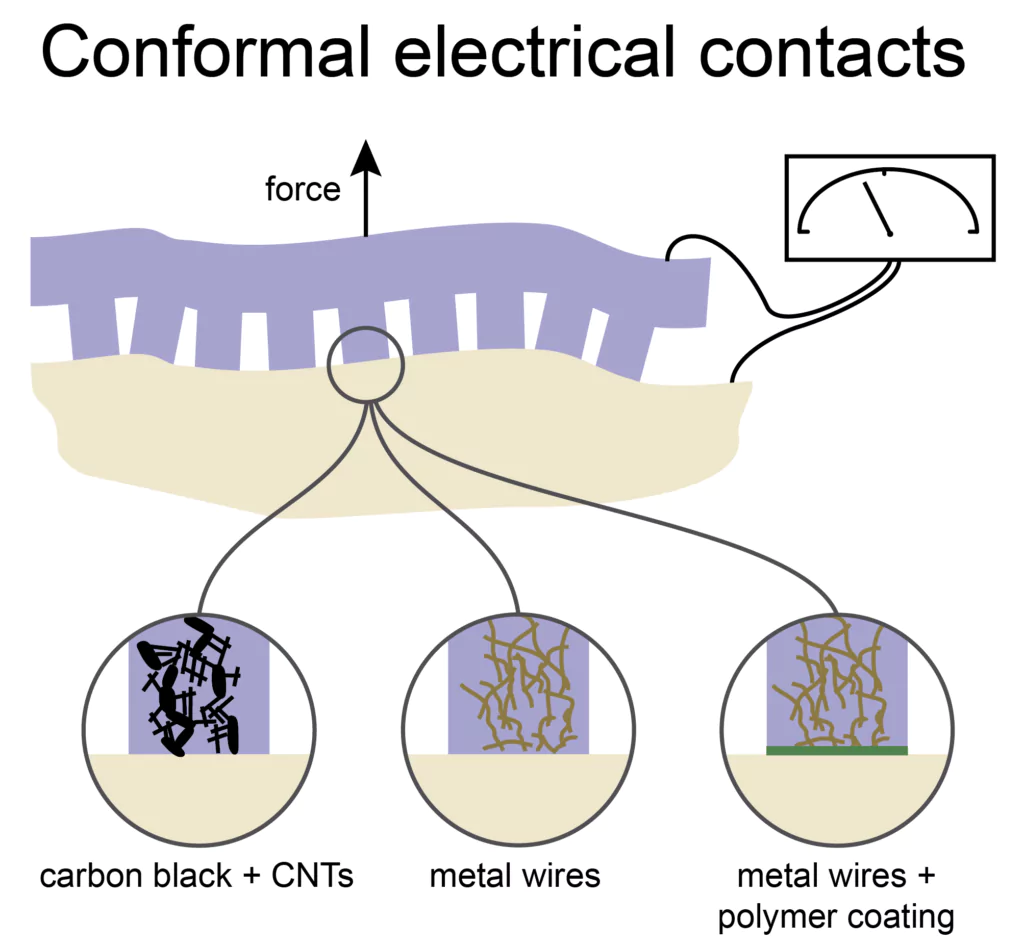
Connecting biological objects with electronics requires soft electrical contacts. To that end, we explore the fabrication of micro-fibrillar adhesion devices from electrically conductive materials. Detailed characterization of these devices reveals the relationship between adhesion properties and electrical resistivity. Their application as electrically tunable devices is also explored.
ActiN: Active nanocomposites
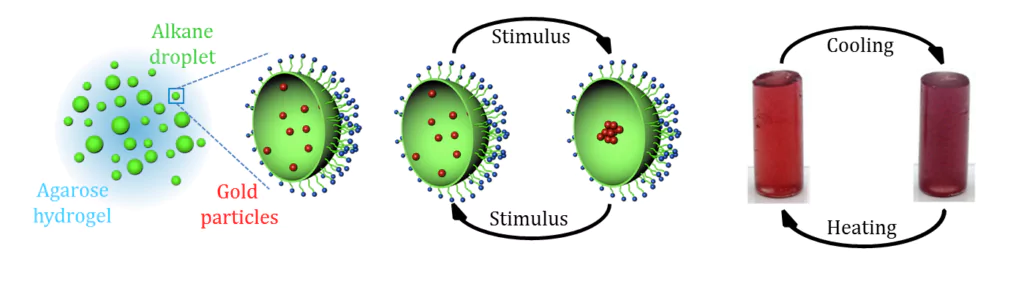
Embedded nanoparticles lend today’s nanocomposites useful properties such as color, strength, or a high refractive index. Their arrangement affects these properties but does not usually change after material synthesis because the particles are bound too strongly in the matrix. We investigate nanocomposites in which metal nanoparticles can move and reorganize in reponse to a stimulus. Thus, the color or other properties of the composite change. In this project, we synthesize model particles and study how they can be embedded such that they retain a certain mobility.
IMPROVe-STEM: New materials for the proliferation and expansion of stem cells
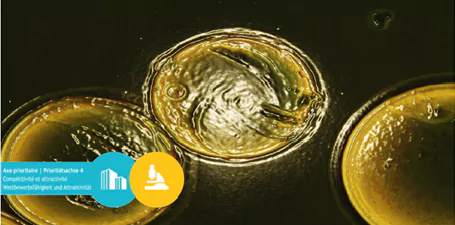
This interdisciplinary project aims at the scalable growth of mesenchymal stem cells using new carrier materials for proliferation. In collaboration with cell biologists, biochemists, chemists and material scientists, we modify surfaces of microspheres so as to increase cell adhesion, help cell proliferation and allow for their easy detachment from these microbeads. The materials-oriented part of the project involves surface characterization of beads which are about 100 µm in size followed by their surface modification such as by polymer graft, plasma activation, and changing surface roughness and surface charges. The project is a part of “European territorial cooperation” INTERREG.


HYBDI: Hybrid Dielectric Layers
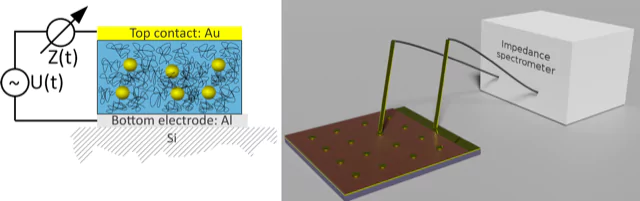
In addition to conductive layers, dielectric layers are also required for printed electronics, e.g. for capacitor elements. Pure polymer layers show a limited polarization in the electric field and hence a relatively low dielectric constant. We investigate hybrid layers of gold nanoparticles separated by insulating ligands. On the one hand, the polarization capability of the hybrid material and the dielectric constant of the layer are to be increased by the metallic particles. On the other hand, a charge transport between the nanoparticles and the failure of the dielectric layer is to be prevented.
Completed Projects
IGLU: INKJET PRINTING OF RFID ANTENNAS ON PAPER WITH HYBRID INKS
In the NanoSpekt project, we developed sinter-free hybrid inks to apply electrical conductors to sensitive surfaces without sintering – including paper and cardboard. In this project, in cooperation with the Papiertechnische Stiftung (PTS), we are investigating how this material can be used to print RFID antennas for contactless identification of packaging directly on carton.
Paper and cardboard are very important, but also difficult substrates: their surface is porous, and during printing the ink penetrates, making the electrical conduction more difficult. Furthermore, paper begins to curl when heated too much and cartons are folded, which can easily damage conductive structures. Therefore, in this AiF-funded cooperation, we are investigating how to make the connection between the cardboard and the ink strong enough – and how to incorporate additional functions into cartons, preferably directly at the manufacturer.
NanoSpekt: Transparent conductive materials based on nanoparticles
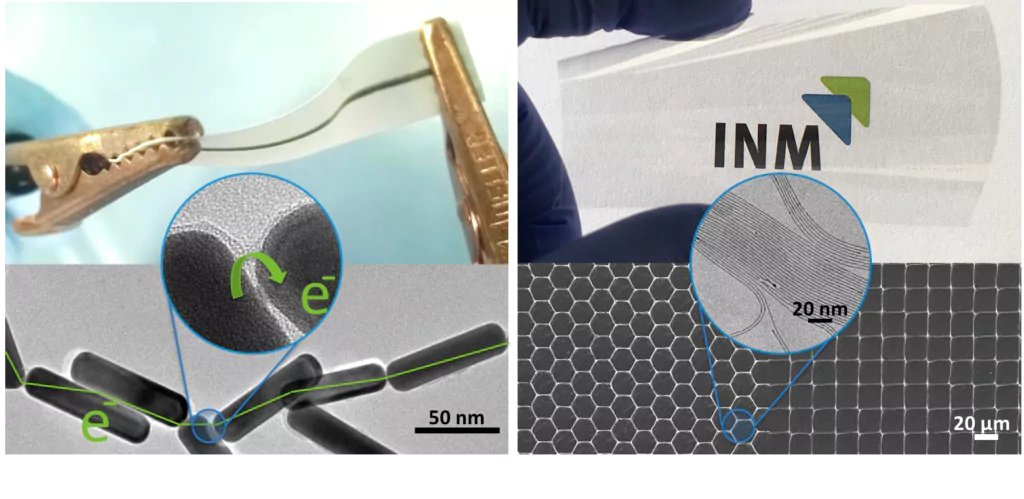
Flexible and printed electronics require new materials. Here, we focus on optically transparent materials for the electronics of the future. This BMBF-funded research project, a part of the NanoMatFutur initiative, uses nanoparticles with defined shapes and arrangements inside polymers to make transparent electrodes for touch-screen display or solar cells, for example. Chemists, material scientists and an engineer collaborate very closely to create new materials that can be processed with well-established wet coating and printing techniques.
SteelParticles: Colloidal characterization of particles from steel
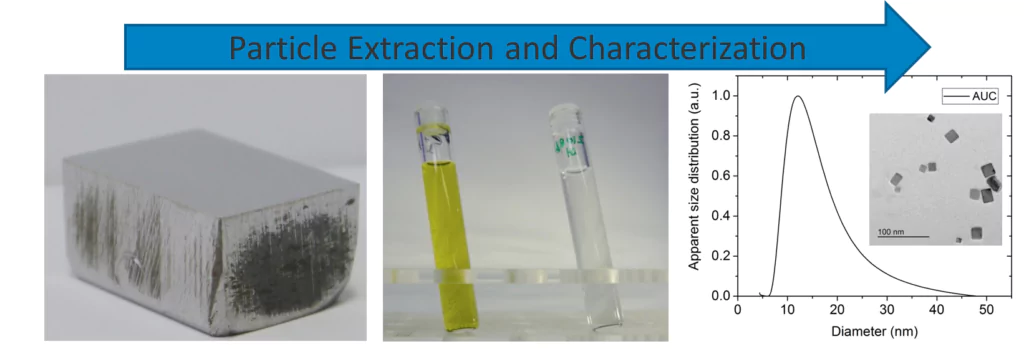
Microalloyed steels contain carbonitride nanoparticles which are responsible for their compelling mechanical properties and good weldability.
In cooperation with the Dillinger Hütte, a steel mill in Saarland, we are investigating the size distribution, chemical composition and morphology of the particles contained in the provided steels. Particle analysis is performed using methods that we developed for colloidal particles and that are not usually employed in metallography.
Publications:
- Hegetschweiler et al., J. Mater. Sci., 2019, 54, 5813-5824. DOI: 10.1007/s10853-018-03263-0
- Hegetschweiler et al., Anal. Chem., 2019, 91, 943-950. DOI: 10.1021/acs.analchem.8b04012
- Hegetschweiler et al., Part. Part. Syst. Charact., 2021, 38, 2000236. DOI: 10.1002/ppsc.202000236
- Meili-Borovinskaya et al., J. Chromatogr. A, 2021, 1641, 461981. DOI: 10.1016/j.chroma.2021.461981
- Webel et al., Ultramicroscopy, 2021, 223, 113219. DOI: 10.1016/j.ultramic.2021.113219
AggloTox: Agglomeration of nanoparticle-protein mixtures
Mixtures of nanoparticles and proteins tend to form hybrid agglomerates. We are interested in the agglomeration mechanisms and the structure of such agglomerates to better understand their role in medicine, ecology, and biomaterials.
Formation Mechanism for Stable Hybrid Clusters of Proteins and Nanoparticles (ACS)
ACS NANO, DOI: 10.1021/acsnano.5b01043
DINAFFF: Nanoparticle analysis with Field-Flow Fractionation
Field-flow fractionation can fractionate particles after size, but it is often plagued by losses of particles due to adsorption and agglomeration. This AiF-ZIMM-project (supported by the BMWi) aims to reduce such losses and make FFF suitable as a standard technique for nanoparticle detection in products, the environment, and food.
HOP-X: Particle-polymer hybrid X-ray imagers
Digital imagers for medical X-ray are based on ceramic layers. This project is a BMBF-funded effort, coordinated by Siemens, to build X-ray imagers based on a new material that contains conductive polymers and inorganic particles. The particles absorb and convert X-ray photons, the polymer transports the charges to electrodes. The Structure Formation Group is mainly concerned with the analysis of the particle-polymer composites’ structures, its origins in fabrication, and its effect on detector performance.
MobiNano: Mobility and interaction of agglomeration nanoparticles
Interactions drives particles to agglomerate, mobility allows them to follow this drive. We use flow setups and synchrotron Small-Angle X-ray Scattering (SAXS) to study early stages of agglomeration. The results help us to better understand the formation of composites, crystallization mechanisms, and biomineralization phenomena.
NanoConfine: Arrangement of particles in emulsion droplets
Nanoparticles that are trapped in emulsion droplets react to their confinement depending on the surfactant. Some of them form beautifully ordered “supraparticles”, fully defined structures that remind of noble gas condensates or small metal clusters. We study how nanoparticles interact with each other and liquid-liquid interfaces in this DFG-funded project. Tanja Schilling at the University of Luxembourg use simulations to predict and understand structure formation, we explore it experimentally.
References:
Publications
Bo, Arixin | Liu, Yawei | Kuttich, Björn | Kraus, Tobias | Widmer-Cooper, Asaph | de Jonge, Niels
DOI:
Self-assembly of nanoscale structures at liquid-solid interfaces occurs in a broad range of industrial processes and is found in various phenomena in nature. Conventional theory assumes spherical particles and homogeneous surfaces, but that model is oversimplified, and nanoscale in-situ observations are needed for a more complete understanding. We used liquid phase scanning transmission electron microscopy (LP-STEM) to examine the interactions that direct the self-assembly of superlattices formed by gold nanoparticles (AuNPs) in non-polar liquids. Varying the molecular coating of the substrate modulated short-ranged attraction and led to switching between a range of different geometric structures including hexagonal close-packed (hcp), simple hexagonal (sh), dodecahedral quasi-crystal (dqc), and body-centered cubic (bcc) lattices, as well as random distributions. Langevin dynamics simulations explain the experimental results in terms of the interplay between nanoparticle faceting, ligand shell structure, and substrate-NP-interactions.
Richter, Robert | Kamal, Mohamed A. M. | Koch, Marcus | Niebuur, Bart-Jan | Huber, Anna-Lena | Goes, Adriely | Volz, Carsten | Vergalli, Julia | Kraus, Tobias | Müller, Rolf | Schneider-Daum, Nicole | Fuhrmann, Gregor | Pagès, Jean-Marie | Lehr, Claus-Michael
DOI:
Abstract When searching for new antibiotics against Gram-negative bacterial infections, a better understanding of the permeability across the cell envelope and tools to discriminate high from low bacterial bioavailability compounds are urgently needed. Inspired by the phospholipid vesicle-based permeation assay (PVPA), which is designed to predict non-facilitated permeation across phospholipid membranes, outer membrane vesicles (OMVs) of Escherichia coli either enriched or deficient of porins are employed to coat filter supports for predicting drug uptake across the complex cell envelope. OMVs and the obtained in vitro model are structurally and functionally characterized using cryo-TEM, SEM, CLSM, SAXS, and light scattering techniques. In vitro permeability, obtained from the membrane model for a set of nine antibiotics, correlates with reported in bacterio accumulation data and allows to discriminate high from low accumulating antibiotics. In contrast, the correlation of the same data set generated by liposome-based comparator membranes is poor. This better correlation of the OMV-derived membranes points to the importance of hydrophilic membrane components, such as lipopolysaccharides and porins, since those features are lacking in liposomal comparator membranes. This approach can offer in the future a high throughput screening tool with high predictive capacity or can help to identify compound- and bacteria-specific passive uptake pathways.
Engel, Lukas F. | Gonzalez-Garcia, Lola | Kraus, Tobias
DOI:
We directed the self-assembly of nanoscale colloids via direct nanoimprint lithography to create flexible transparent electrodes (FTEs) with metal line widths below 3 μm in a roll-to-roll-compatible process. Gold nanowires and nanospheres with oleylamine shells were imprinted with soft silicone stamps, arranged into grids, and converted into metal lines in a plasma process. We studied the hierarchical structure and opto-electronic performance of the resulting grids as a function of particle geometry and concentration. The performance in terms of optical transmittance was dominated by the line width. Analysis of cross-sections indicated that plasma sintering only partially removed the insulating ligands and formed lines with thin conductive shells and a non-conductive core. We provide evidence that the self-assembly of high-aspect nanowires can compensate for defects of the stamp and substrate irregularities during imprinting, while spheres cannot. The wire-based electrodes thus outperformed the sphere-based electrodes at ratios of optical transmittance to sheet resistance of up to ≈ 0.9 %·Ωsq-1, while spheres only reached ≈ 0.55 %·Ωsq-1.
Engel, Lukas F. | González-García, Lola | Kraus, Tobias
DOI:
We study the stability of flexible transparent electrodes (FTEs) that were self-assembled from ultra-thin gold nanowires (AuNW) by direct nanoimprinting of inks with different particle concentrations (1 to 10 mg mL−1). The resulting lines were less than 3 μm wide and contained bundles of AuNW with oleylamine (OAm) ligand shells. Small-angle X-ray scattering confirmed a concentration-independent bundle structure. Plasma sintering converted the wire assemblies into lines with a thin metal shell that contributes most to electrical conductivity and covers a hybrid core. We studied the relative change in sheet resistance and the morphology of the FTEs with time. The sheet resistance increased at all concentrations, but at different rates. The metal shell aged by de-wetting and pore formation. The hybrid core de-mixed and densified, which led to a partial collapse of the shell. Residual organics migrated through the shell via its pores. Lines formed at low concentration (cAu = 2 to 3 mg mL−1) contained less residual organics and aged slower than those formed at high cAu ≥ 5 mg mL−1. We passivated the conductive shell with thin, adsorbed layers of PEDOT:PSS and found that it decelerated degradation by slowing surface diffusion and hindering further rupture of the shell. Thick capping layers prevented degradation entirely and stopped pore formation.
Zhang, Long | Schmidt, Dominik S. | González-García, Lola | Kraus, Tobias
DOI:
Abstract The microstructural changes caused by the addition of the ionic liquid (IL) 1-ethyl-3-methylimidazolium bis(trifluoromethylsulfonyl)imide to polydimethylsiloxane (PDMS) elastomer composites filled with carbon black (CB) are analyzed to explain the electrical, mechanical, rheological, and optical properties of IL-containing precursors and composites. Swelling experiments and optical analysis indicate a limited solubility of the IL in the PDMS matrix that reduces the cross-linking density of PDMS both globally and locally, which reduces the Young's moduli of the composites. A rheological analysis of the precursor mixture shows that the IL reduces the strength of carbon–carbon and carbon–PDMS interactions, thus lowering the filler–matrix coupling and increasing the elongation at break. Electromechanical testing reveals a combination of reversible and irreversible piezoresistive responses that is consistent with the presence of IL at microscopic carbon–carbon interfaces, where it enables re-established electrical connections after stress release but reduces the absolute conductivity.
Priesner, Jamir | Kraus, Tobias | de Jonge, Niels
DOI:
Abstract The electron beam of an environmental scanning electron microscope is used to manipulate gold nanoparticles (AuNPs) at the liquid-vapor interface of their aqueous dispersion. Controlled motion and agglomeration of AuNPs into larger structures is achieved, enabling the writing of superstructures that float at the interface. AuNPs move toward the electron beam, independent of zeta potential, and the spatial range at which this attraction acts is much larger than what is possible for electrostatic interactions. The speed of agglomerate growth depends on the applied electron flux, and electron beam energy. The hypothesis that this electron beam-induced AuNP assembly process is caused by local liquid evaporation upon electron beam heating is presented.
Hübner, Hanna | Niebuur, Bart-Jan | Büttner, Thomas | Koch, Marcus | Stühn, Bernd | Kraus, Tobias | Scheschkewitz, David | Gallei, Markus
DOI:
Block copolymers (BCPs) are known to self-assemble into various structures. In particular, crystallization-driven self-assembly (CDSA) strategies revealed a high potential for expanding the scope of obtainable structures at the nanometer length scale. Herein, we report the characterization of different self-assembled structures of a series of amorphous-crystalline BCPs poly(dimethyl silacyclobutane)-block-poly(2-vinyl pyridine) (PDMSB-b-P2VP). The polymers and their structure formation in different solvents were analyzed, and their response toward different solvent vapors and temperatures in the deposited state was evaluated by transmission and scanning electron microscopy (TEM, SEM) and atomic force microscopy (AFM). The influence of additional solvents, temperature, and ultrasonication on colloidal dispersions was investigated with additional dynamic light scattering (DLS) and differential scanning calorimetry (DSC) experiments. Finally, the polymer was introduced to a colloidal confinement by employing the solvent evaporation method in the presence of cetyl-N,N,N-trimethylammoniumbromide (CTAB) or 16-hydroxycetyl-N,N,N-triethylammoniumbromide (CTEAB-OH) as surfactants, resulting in a plethora of additional colloidal structures.
Bharadwaj, Swaminath | Niebuur, Bart-Jan | Nothdurft, Katja | Richtering, Walter | van der Vegt, Nico F. A. | Papadakis, Christine M.
DOI:
Cononsolvency is an intriguing phenomenon where a polymer collapses in a mixture of good solvents. This cosolvent-induced modulation of the polymer solubility has been observed in solutions of several polymers and biomacromolecules, and finds application in areas such as hydrogel actuators, drug delivery, compound detection and catalysis. In the past decade, there has been a renewed interest in understanding the molecular mechanisms which drive cononsolvency with a predominant emphasis on its connection to the preferential adsorption of the cosolvent. Significant efforts have also been made to understand cononsolvency in complex systems such as micelles, block copolymers and thin films. In this review, we will discuss some of the recent developments from the experimental, simulation and theoretical fronts, and provide an outlook on the problems and challenges which are yet to be addressed.
Buescher, Johannes | John, Thomas | Boehm, Anna K. | Weber, Louis | Abdel-Hafez, Salma M. | Wagner, Christian | Kraus, Tobias | Gallei, Markus | Schneider, Marc
DOI:
Due to the limited available amounts of components, especially of low water-soluble drugs, formulation development is often impeded by a careful characterization. The use of small batch sizes might solve this problem but requires also adequate analytics. Concentration of nanoparticulate formulations lack straightforward evaluation techniques. In this work, a precise and straight-forward method is established to individually count nanoparticles. A microfluidic chip with known dimensions was used to visualize single particles flowing through the channel (single-particle tracking (SPT)). A sequence of 10,000 images was analyzed to determine the mean particle concentration. The proposed method is independent of the particular flow rate through the microfluidic chip as long as there is no particle overlap and a continuous exchange of particles. Monodisperse Rhodamine B labeled poly (methyl methacrylate) (PMMA) nanoparticles (267.03 ± 9.79 nm) were used as a model and reference particle system for the evaluation process of SPT allowing for a gravimetric determination based on density analysis using analytical ultracentrifugation (AUC) and gas pycnometry. The SPT method was evaluated and compared to other techniques used for concentration measurement. Both approaches (SPT and gravimetry) provide very similar and comparable results indicating the applicability of this novel quantification approach. In contrast, multi angle dynamic light scattering (MADLS) could not yield a precision as good as SPT (number density rel. standard deviation SD nSPT = 11.67%; SD nMADLS = 49.45%). Finally, the measured particle number concentrations can be realized in low concentration ranges (0.8249 μg mL−1 – 0.08249 μg mL−1) not accessible for MADLS (0.08249 mg mL−1 – 0.008249 mg mL−1) and gravimetric analysis.
Gemmer, Lea | Hu, Qiwei | Niebuur, Bart-Jan | Kraus, Tobias | Balzer, Bizan N. | Gallei, Markus
DOI:
Functional amphiphilic block copolymers (BCPs) are versatile, smart, and promising materials that are often used as soft templates in nanoscience. BCPs generally feature the capability of microphase-separation leading to various interesting morphologies at the nanometer length scale. Materials derived from BCPs can be converted into porous structures while retaining the underlying morphology of the matrix material. Here, a convenient and scalable approach for the fabrication of porous functional polyvinylpyridines (P2VP) is introduced. The BCP polyisoprene-block-P2VP (PI-b-P2VP) is obtained via sequential anionic polymerization of the respective monomers and used to form either BCP films in the bulk state or a soft template in a composite with cellulose fibers. Cross-linking of the BCPs with 1,4-diiodobutane is conducted and subsequently PI domains are selectively degraded inside the materials using ozone, while preserving the porous and tailor-made P2VP nanostructure. Insights into the feasibility of the herein presented strategy is supported by various polymer characterization methods comprising nuclear magnetic resonance (NMR), size exclusion chromatography (SEC), and differential scanning calorimetry (DSC). The resulting bulk- and composite materials are investigated regarding their morphology and pore formation by scanning electron microscopy (SEM), atomic force microscopy (AFM) and small-angle X-ray scattering (SAXS). Furthermore, chemical conversions were examined by energy dispersive X-ray spectroscopy (EDS), attenuated total reflection Fourier-transformation infrared spectroscopy (ATR-FTIR) and water contact angle (WCA) measurements. By this convenient strategy the fabrication of functional porous P2VP in the bulk state and also within sustainable cellulose composite materials is shown, paving the synthetic strategy for the generation of a new family of stimuli-responsive sustainable materials.